

Contested and uncontested divorces represent two distinct paths through New York’s family law system. Your choice significantly influences costs, timelines, and the extent of court involvement. This guide clarifies the differences between contested and uncontested divorces in New York, connects these distinctions to residency requirements and New York’s no-fault divorce ground, and illustrates how decisions regarding custody, support, and property shape the final outcome. Whether you’re considering negotiation, mediation, collaborative law, or litigation, understanding these differences is key to strategic planning and minimizing unnecessary expenses and delays.
For New York City residents weighing their options, The Shapiro Law Firm, LLC offers a Free Case Evaluation and comprehensive legal services for all divorce proceedings, whether contested or uncontested. We encourage you to schedule a consultation after reviewing the essential information below. The following sections provide clear checklists, procedural steps, cost breakdowns, and actionable next steps to help you choose the approach that best safeguards your legal and family interests.
What Is the Difference Between Contested and Uncontested Divorce in New York?
The primary distinction between contested and uncontested divorces lies in agreement: an uncontested divorce means spouses have reached a consensus on all significant terms, while a contested divorce involves disputes requiring court intervention. Agreement simplifies the process by allowing parties to submit a negotiated settlement agreement for the court’s review and entry of judgment. Conversely, contested cases progress through pleadings, discovery, and potentially a trial. The key advantages of an uncontested divorce are typically lower costs, a faster resolution, and greater control over the outcome. Contested litigation, however, involves higher expenses, longer timelines, and judicial decision-making. Grasping these differences is vital for planning whether to pursue settlement options like mediation or prepare for formal litigation and discovery.
What Defines an Uncontested Divorce in New York?
An uncontested divorce in New York is characterized by mutual agreement on all material issues, including custody, child support, spousal maintenance, and the equitable distribution of assets and debts. The parties jointly present their settlement agreement to the court for approval. The mechanism that formalizes an uncontested divorce is a fully executed settlement agreement and the submission of required documents, such as sworn affidavits or stipulations, enabling the court to enter a judgment without extensive hearings. The practical benefit is that parties retain control, reduce adversarial conflict, and avoid many discovery and motion-related costs associated with litigation. Many uncontested cases still necessitate careful documentation and financial disclosure to ensure the settlement is fair and legally sound, increasing the likelihood of court acceptance.
What Makes a Divorce Contested in New York?
A divorce becomes contested when spouses cannot agree on one or more significant terms, such as custody, child support, spousal maintenance, or property division, thereby triggering formal court involvement to resolve these disputes. The process of contested litigation involves filing a summons and complaint, serving the respondent, receiving a response, engaging in discovery (document production and depositions), filing interim motions, participating in settlement conferences, and potentially proceeding to trial where a judge decides unresolved issues. The primary consequence of a contested divorce is increased expense, driven by attorney hours, expert witness fees, and court appearances, along with a longer timeline that can span months or even years for complex cases. Given these stakes, many parties explore mediation, collaborative law, or early settlement negotiations to circumvent the expense and uncertainty of trial.
How Do New York Divorce Laws Govern Contested and Uncontested Cases?
New York’s Domestic Relations Law and the New York State Unified Court System establish the legal framework for both contested and uncontested divorces, including the recognized grounds for divorce and the residency requirements necessary to establish jurisdiction. The most commonly used ground today is the no-fault basis—irretrievable breakdown of the marriage—which parties frequently cite in both uncontested and contested cases. Fault-based grounds remain available and may influence strategy in contested matters. Procedural rules dictate the required filings, financial disclosure obligations, and the court’s role in reviewing settlement agreements for fairness, particularly when children are involved.
What Are the Key Requirements for Filing an Uncontested Divorce in New York?
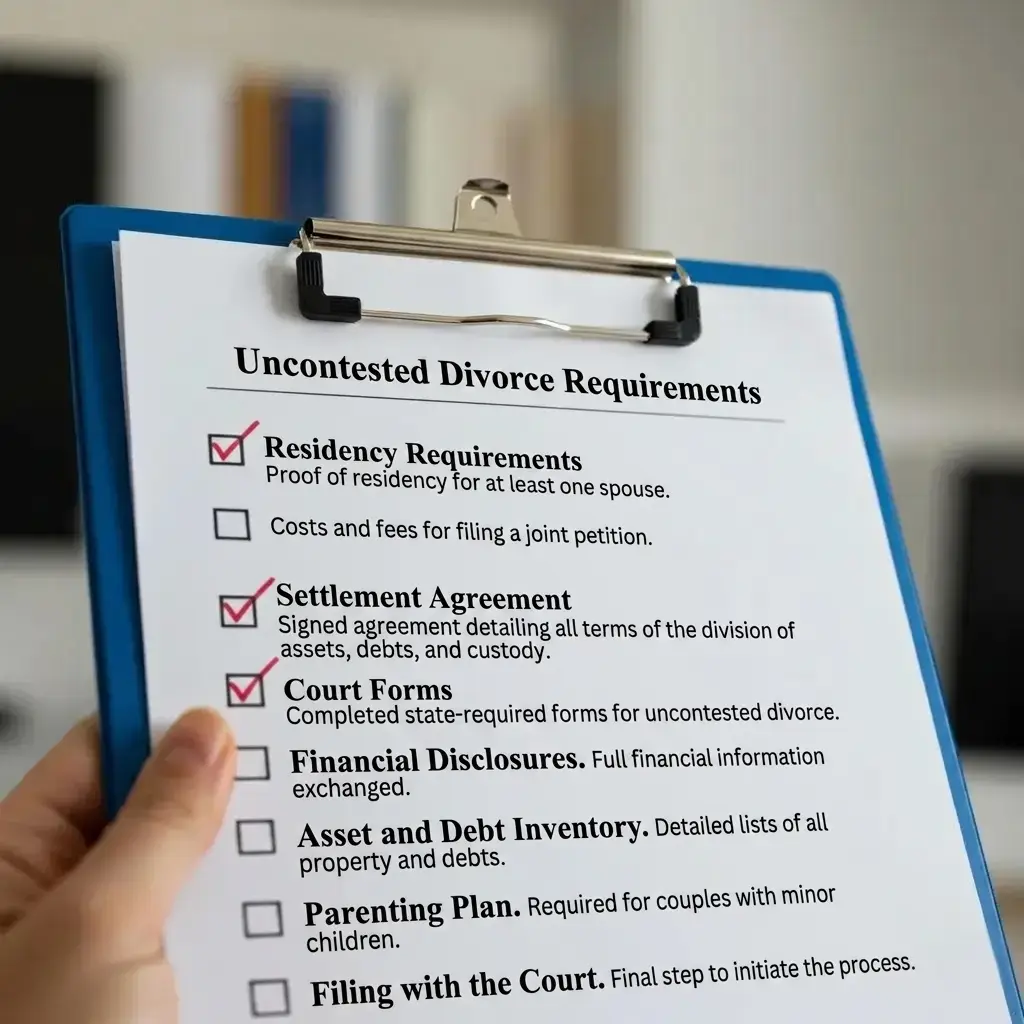
Filing an uncontested divorce in New York necessitates meeting residency prerequisites, preparing a comprehensive settlement agreement that addresses all material issues, and completing the required court forms and sworn statements. This allows the court to enter judgment without adversarial proceedings. The core mechanism here is coordinated documentation: parties must exchange financial information and formalize terms for custody, support, maintenance, and property division so the court can assess fairness and legality. The primary benefit is a streamlined resolution and reduced court involvement, with judicial review serving as a crucial safeguard, especially for child-related terms.
What Are New York’s Residency Requirements for Uncontested Divorce?
New York’s residency rules stipulate that at least one spouse must meet specific statutory residency criteria before a court will accept a divorce filing. This typically involves continuous residence in the state or specific marriage and residence combinations that confer jurisdiction under the Domestic Relations Law. The mechanism is jurisdictional: without proper proof of residency, the court cannot grant a dissolution. Applicants must provide documentation, such as affidavits attesting to their residence and timelines that align with statutory pathways.
What Agreements Must Be Reached for an Uncontested Divorce?
An uncontested divorce requires a comprehensive settlement agreement that covers custody and visitation, child support, spousal maintenance, equitable distribution of assets and debts, and any necessary tax or insurance arrangements to ensure finality. The mechanism for enforceability is a written, signed agreement, coupled with required sworn statements and financial disclosures, demonstrating to the court that the terms were negotiated knowingly and voluntarily. Key practical elements include a detailed parenting plan with schedules, the calculation of child support according to guideline formulas, and clear language for property division or buyouts to prevent post-judgment disputes. Completing these agreements before filing minimizes the likelihood of the court requesting additional information and helps achieve a final judgment with limited court hearings.
How Does the No-Fault Divorce Ground Apply to Uncontested Cases in NY?
The no-fault ground—irretrievable breakdown of the marriage—allows couples to assert that the marriage has irretrievably broken down for a specified period without assigning blame. This simplifies pleadings and reduces the need to prove fault in uncontested cases. The mechanism is procedural: pleading no-fault directs the court’s focus toward the settlement’s fairness rather than contested factual disputes, streamlining review and expediting the entry of judgment. The benefit is fewer invasive fact-finding steps and a less adversarial process, enabling parties to concentrate on negotiated terms instead of litigating past conduct. When combined with complete financial disclosure and a robust agreement, pleading no-fault is often the most efficient route to final dissolution.
How Does the Contested Divorce Process Work in New York?
A contested divorce in New York follows a structured sequence of stages: filing, service, response, discovery, motions and conferences, settlement efforts, and potentially trial. Each stage has distinct objectives, timelines, and cost implications. The mechanism of litigation involves adversarial fact-gathering and legal argument. Discovery uncovers financial and custodial facts, motions resolve interim disputes, and the court oversees settlement conferences and trial if necessary. The benefit of this process is that unresolved disputes receive judicial resolution and enforcement, but the cost includes higher attorney fees, potential expert witness involvement, and uncertainty until a final decision.
What Are the Steps in a New York Contested Divorce?
The contested process typically begins with filing a summons and complaint, followed by service on the respondent and a formal answer or response. Discovery then involves examining financial records and custodial facts. Later stages include motions, preliminary conferences, settlement efforts, and a trial if agreement is not reached. The mechanism of discovery—document production, interrogatories, and depositions—gathers evidence that shapes settlement negotiations or trial strategy. Motions can be filed to seek temporary relief, such as interim support or custody orders. Parties benefit from strategic planning at each stage to limit costs and focus discovery on material issues. Early mediation or settlement negotiations can interrupt the litigation trajectory.
What Grounds Can Lead to a Contested Divorce in New York?
Contested divorces may be based on the no-fault ground of irretrievable breakdown or various fault grounds, such as adultery, abandonment, cruel and inhuman treatment, or imprisonment. The choice of ground can influence litigation strategy and evidentiary requirements. Pursuing fault-based claims necessitates proof and potentially more invasive discovery, which escalates costs and may extend timelines. Relying on no-fault can narrow disputes to financial and parenting matters. The practical impact is that fault allegations sometimes affect spousal maintenance or settlement leverage but rarely determine custody unless there is direct harm to the child. Understanding the grounds helps counsel prioritize which disputes warrant litigation and which are better resolved through negotiation or alternative dispute resolution.
How Are Disputed Issues Like Child Custody and Property Division Resolved?
Disputed issues are resolved through negotiated settlement, court-ordered mediation, or judicial determination at trial. The court applies statutory standards: the “best interests of the child” for custody and equitable distribution principles for property and debt division. The mechanism for custody decisions involves a statutory factor-based assessment of parental fitness, the child’s needs, and continuity of care. Property division follows the classification of separate versus marital property and equitable apportionment. Parties often utilize experts—financial analysts, appraisers, or custody evaluators—to inform negotiations or testimony, which increases costs but clarifies contested facts. Effective resolution typically blends legal strategy with realistic settlement planning to minimize expense and achieve enforceable, sustainable outcomes.
What Are the Cost and Time Differences Between Contested and Uncontested Divorce in New York?
Cost and time differences depend on complexity, the number of contested issues, the use of experts, the scope of discovery, and court backlogs. Uncontested divorces commonly resolve in weeks to months at a lower cost, while contested cases often take many months to years and incur substantially higher fees. The mechanism driving costs is attorney time spent on negotiations, discovery, motions, and trial preparation, plus fees for experts and court appearances. Uncontested matters concentrate expenses on drafting and reviewing a settlement and preparing required filings. Understanding these drivers allows for the selection of cost-saving strategies—mediation, collaborative law, or targeted discovery—to contain expenses and compress timelines.
How Much Does an Uncontested Divorce Typically Cost in New York?
Uncontested divorces in New York generally incur lower costs because legal work focuses on negotiating and drafting a settlement agreement, preparing sworn statements and required forms, and limited court appearances. Typical ranges vary by complexity but are often a fraction of contested litigation costs. The mechanism lowering costs is reduced attorney hours and minimal need for expert services, with primary expenses often covering filing fees, attorney drafting time, and brief court appearances or settlement conferences. Parties can further reduce costs by organizing financial records in advance and using mediation for specific issues, which shortens drafting time and increases the chance of an efficient final judgment. Planning for these efficiencies helps parties estimate expenses and determine if a negotiated route is feasible.
What Are the Average Costs of a Contested Divorce in New York?
Contested divorces typically result in significantly higher costs, driven by prolonged discovery, expert witnesses, motion practice, and trial preparation. Ranges vary widely with complexity and can reach tens of thousands of dollars, depending on issues like business valuations or complex asset portfolios. The mechanism inflating costs is the cumulative attorney hours and specialist fees—financial analysts, forensic accountants, custody evaluators—required to address factual disputes and advocate in court. To manage budgets, parties should identify major cost drivers early, consider phased discovery, and explore settlement opportunities that narrow issues before engaging costly experts. Effective cost planning provides realistic expectations and often motivates creative resolution methods.
How Long Does Each Divorce Type Usually Take in New York?
Uncontested divorces can conclude within a few weeks to several months, depending on court scheduling and the completeness of documentation. Contested cases commonly take many months to multiple years when discovery, expert analysis, and trial scheduling are involved. The mechanism affecting duration includes court backlog—especially in New York City—the complexity of contested issues, and the parties’ willingness to negotiate. Mediation and collaborative approaches often shorten timelines considerably. Understanding likely durations aids in planning for interim orders, temporary financial needs, and parenting arrangements. Parties seeking an expedited resolution should prioritize early settlement discussions and consider binding alternative dispute resolution where appropriate.
How Can Mediation and Collaborative Law Reduce Costs and Time?
Mediation and collaborative law reduce costs and time by focusing parties on negotiated solutions with structured facilitation. Mediators or collaborative teams help narrow disputes, avoid extensive discovery, and finalize enforceable settlement agreements without trial. The mechanism involves guided negotiation sessions, tailored information exchanges, and agreements that minimize subsequent litigation risk. These approaches often replace multiple court appearances and expensive motions. Benefits include lower legal fees, faster resolution, greater control over outcomes, and reduced emotional strain for families, particularly those with children.
- Mediation and collaborative law offer structured negotiation frameworks that can resolve multiple issues efficiently.
- These alternatives typically require fewer attorney hours and reduce reliance on costly experts.
- Parties maintain control over outcomes and craft tailored agreements that better reflect family needs.
Carefully considering mediation or collaborative law early can limit litigation exposure and preserve resources for future enforcement or modification if necessary.
What Are the Common Disputed Issues in New York Contested Divorces?
Contested divorces most often involve disputes concerning child custody and visitation, child support and spousal maintenance, and the division of property and debt under New York’s equitable distribution framework. The mechanism that escalates disputes is the interplay of legal standards—the “best interests of the child” for custody and equitable apportionment for property—with real-world complexities such as business valuations, retirement assets, and parental schedules. Identifying common disputed areas helps in preparing targeted evidence and negotiation strategies before litigation inflates costs.
How Is Child Custody Determined in Contested Divorces?
Child custody decisions in New York are guided by the “best interests of the child” standard. This standard evaluates factors such as parental ability to provide care, the child’s needs, continuity of education and community ties, and any history of domestic violence or substance abuse. The court’s analytical mechanism is a statutory factor-based assessment supported by evidence, including witness testimony, school records, and professional evaluations, which the court uses to craft custody and visitation arrangements. The benefit for parents is that thorough preparation and documentation of parenting routines, schedules, and the child’s needs can enhance persuasive presentation during settlement discussions or trial. Gathering relevant records and understanding statutory factors early helps parents present a focused case or reach an informed settlement.
What Are the Child Support and Spousal Maintenance Considerations?
Child support in New York generally follows guideline formulas based on parental income and the number of children. Spousal maintenance (alimony) depends on factors like the length of the marriage, earning capacity, and the standard of living during the marriage. Both areas allow for deviations based on equity. The mechanism for calculation uses statutory guidelines for child support and discretionary judicial analysis for maintenance, often requiring income documentation and projections that may necessitate forensic accounting in contested matters. The practical implication is that parties should compile accurate income records, consider temporary orders during litigation, and evaluate the long-term financial consequences of proposed settlements.
How Does Property and Debt Division Work in Contested Cases?
New York applies equitable distribution principles to divide marital property and debt. This involves distinguishing marital assets from separate property and considering factors such as the duration of the marriage, age, health, and contributions to marital wealth when allocating shares. The mechanism for division includes asset classification, valuation (often requiring appraisals or expert reports), and judicial balancing to achieve an equitable outcome, rather than strict equal division. Common disputed items include business interests, retirement accounts, and debt allocation, each requiring targeted discovery and valuation to achieve a fair settlement. Addressing valuation early and selecting appropriate experts can streamline resolution and reduce the uncertainty of judicial apportionment.
How Can The Shapiro Law Firm Help With Your Contested or Uncontested Divorce in New York?
The Shapiro Law Firm, LLC provides client-focused family law representation in New York City, offering expertise across contested litigation, uncontested settlements, mediation assistance, and strategic planning to protect clients’ legal rights and family interests. The firm’s approach combines local court experience, skillful settlement drafting, targeted discovery management, and the use of appropriate experts to achieve practical outcomes while managing costs. Engaging the firm offers benefits such as tailored legal strategies, options for mediation and collaborative law to reduce time and expense, and access to a Free Case Evaluation to assess case-specific risks and likely costs.
What Is The Shapiro Law Firm’s Approach to Divorce Cases in NYC?
The Shapiro Law Firm’s approach prioritizes client-centered counseling, effective problem-solving, and leveraging extensive New York court experience to secure practical outcomes, whether through negotiation or litigation. The firm’s representation methodology includes meticulous financial disclosure management, strategic use of mediation and settlement conferences when appropriate, and vigorous advocacy in contested matters to protect custody and financial interests. The practical benefit for clients is a combination of cost-aware planning and courtroom readiness, with an emphasis on clear communication and enforceable agreements that anticipate future issues.
How Do You Schedule a Free Case Evaluation With The Shapiro Law Firm?
To schedule a Free Case Evaluation with The Shapiro Law Firm, LLC, Click Here to submit our form or call us at (212) 444-8064. Prepare essential documents and questions to maximize the evaluation’s usefulness for your case planning. The intake process typically involves providing an overview of your situation, relevant timelines, and key financial or custody documents so an attorney can assess your options and recommend next steps. Useful items to have ready include recent pay stubs, bank statements, a list of assets and debts, and any existing court orders.
Frequently Asked Questions
What Are the Benefits of Choosing an Uncontested Divorce?
An uncontested divorce offers significant advantages, including lower costs, faster resolution times, and reduced emotional stress. Because both parties agree on all terms, the process is typically streamlined, requiring fewer court appearances and less legal intervention.
Can I Modify an Uncontested Divorce Agreement Later?
Yes, an uncontested divorce agreement can be modified later, though the process may vary depending on the original agreement’s terms and the circumstances prompting the change. If the agreement includes provisions for modification, such as changes in income or living situations, parties can typically file a motion with the court to adjust the terms.
What Should I Do If My Spouse Refuses to Sign the Uncontested Divorce Papers?
If your spouse refuses to sign the uncontested divorce papers, you may need to transition to a contested divorce. This involves filing a summons and complaint to initiate the litigation process.
How Does Child Support Work in Uncontested Divorces?
In uncontested divorces, child support is typically determined based on New York’s statutory guidelines, which consider the income of both parents and the number of children involved.
What Happens If One Spouse Moves Out During the Divorce Process?
If one spouse moves out during the divorce process, it can affect various aspects of the case, including custody arrangements and financial responsibilities.
Are There Alternatives to Court for Resolving Divorce Disputes?
Yes, several alternatives to court exist for resolving divorce disputes, including mediation and collaborative law. Mediation involves a neutral third party who facilitates discussions between spouses to reach mutually agreeable solutions. Collaborative law allows both parties to work with their attorneys to negotiate terms without going to court.
Do I Need a Lawyer for an Uncontested Divorce in New York?
In many cases, yes. While parties with simple finances and no children might manage an uncontested filing independently, legal representation is recommended when assets, debts, parenting plans, or future enforcement concerns are present.
Can an Uncontested Divorce Become Contested?
Yes, an uncontested divorce can become contested if one party withdraws consent, disputes emerge during final review, or material facts are later revealed that impact settlement terms.
What Happens If Spouses Cannot Agree on Child Custody?
If spouses cannot agree on child custody, the court may issue temporary orders and proceed with evaluations, hearings, or mediation as needed, always guided by the child’s best interests.
How Does Mediation Work in New York Divorce Cases?
Mediation is a voluntary process where a neutral mediator facilitates negotiation between spouses to resolve issues such as custody, support, and property division. It typically involves confidential sessions focused on interest-based solutions rather than adversarial litigation. It is especially effective when parties can communicate or wish to limit court involvement.
Conclusion
Understanding the distinctions between contested and uncontested divorce in New York empowers individuals to make informed decisions that can significantly impact their financial and emotional well-being. By selecting the appropriate path, parties can benefit from reduced costs, faster resolutions, and greater control over their outcomes. For personalized guidance tailored to your unique situation, consider scheduling a Free Case Evaluation with The Shapiro Law Firm, LLC. Take the first step toward a smoother divorce process today.